
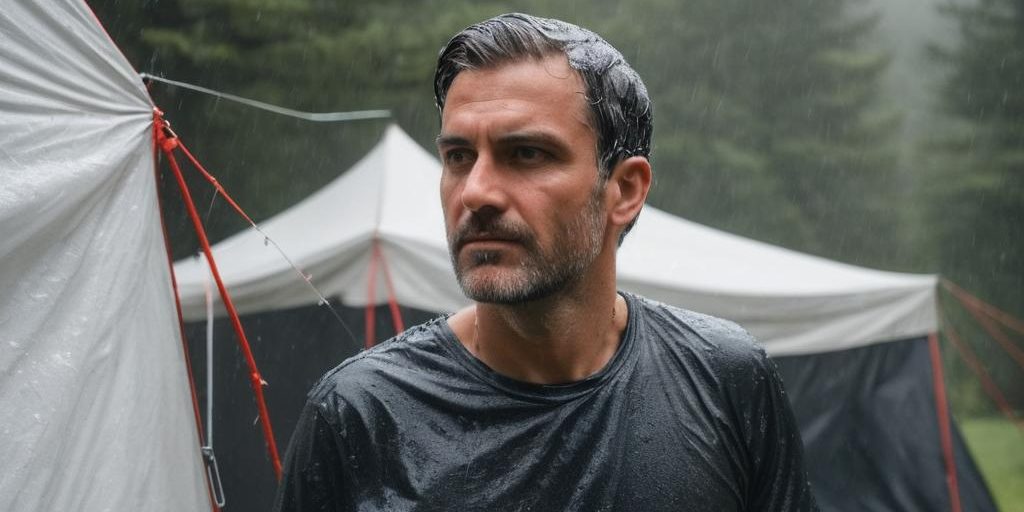
Tent Talk: Weighing Waterproof vs Breathable for Your Next Adventure
As outdoor enthusiasts, we’ve all been there – standing in the pouring rain, desperately searching for a dry spot to pitch our tent. Or, on the other hand, waking up to a soggy mess inside our supposedly waterproof shelter.
The age-old debate between waterproof and breathable tents has left many of us scratching our heads, wondering which one is the better choice. In this article, we’ll delve into the pros and cons of each type, exploring the factors that influence their performance in various weather conditions. We’ll also discuss the importance of condensation management, wind penetration, and rain resistance – all crucial considerations when choosing a tent that meets your needs. Whether you’re an experienced hiker or a casual camper, this comprehensive guide will help you make an informed decision about which type of tent is right for you. The Waterproof Conundrum
Waterproof tents are designed to keep you dry in the face of rain and snow. They feature a durable, water-repellent fabric that prevents water from penetrating the tent’s walls and floor. This sounds like a no-brainer, especially if you’re planning on camping in areas with heavy precipitation. However, there are some caveats to consider. One major drawback of waterproof tents is their tendency to retain heat and moisture inside the tent. When the rain pounds against the fabric, it creates a warm, humid environment that can lead to condensation buildup. This can be disastrous if you’re not prepared, as the resulting moisture can seep into your sleeping bag or clothing, making for an uncomfortable night’s sleep. Another issue with waterproof tents is their susceptibility to wind penetration. While they may be great at keeping rain out, they often struggle to resist strong winds, which can compromise their structure and lead to tears in the fabric. This can leave you exposed to the elements, which defeats the purpose of having a waterproof tent in the first place. The Breathable Enigma
Breathable tents, on the other hand, prioritize ventilation over waterproofing. They feature mesh panels that allow for airflow, helping to regulate the temperature inside the tent and prevent condensation buildup. This makes them an attractive option for warm-weather camping or backpacking trips where rain is less of a concern. However, breathable tents often compromise on their waterproofing abilities. While they may be better at resisting wind penetration than waterproof tents, they’re more susceptible to rain and snow. If you’re planning on camping in areas with heavy precipitation, a breathable tent may not be the best choice – unless you’re prepared to set up your shelter in a way that allows for maximum ventilation. Condensation Management
One of the most significant concerns when it comes to choosing between waterproof and breathable tents is condensation management. Condensation occurs when warm, moist air meets a cool surface, causing the water vapor to condense into droplets. In the context of camping, this can be particularly problematic if you’re not prepared. There are several strategies for managing condensation in your tent:
1. Ventilation: Proper ventilation is key to preventing condensation buildup. Look for tents with mesh panels that allow for airflow, and consider using a ventilation system or window to improve air circulation. 2. Rain fly management: A well-designed rain fly can help direct water away from the tent’s walls and floor, reducing the risk of condensation buildup. 3. Ground tarp: Using a ground tarp can help protect your sleeping bag and clothing from moisture seeping up through the ground. Tent Types: A Comparison
When it comes to choosing between waterproof and breathable tents, there are several factors to consider:
1. Rain resistance: If you’re planning on camping in areas with heavy precipitation, a waterproof tent is likely your best bet. 2. Wind penetration: Breathable tents tend to perform better in windy conditions, as they allow for airflow that helps resist wind pressure. 3. Condensation management: As discussed earlier, condensation management is critical when choosing between waterproof and breathable tents. Here’s a breakdown of the pros and cons of each type:
Waterproof Tents
Pros:
* Excellent rain resistance
* Effective at keeping you dry in wet conditions
Cons:
* Susceptible to wind penetration
* Prone to condensation buildup
Breathable Tents
Pros:
* Excellent ventilation
* Good wind resistance
* Better suited for warm-weather camping or backpacking trips
Cons:
* Poor rain resistance
* May compromise on waterproofing abilities
Conclusion
Choosing between a waterproof and breathable tent ultimately comes down to your specific needs and preferences. If you’re planning on camping in areas with heavy precipitation, a waterproof tent is likely the better choice – but make sure you’re prepared for condensation management. On the other hand, if you prioritize ventilation over rain resistance, a breathable tent may be the way to go. Just keep in mind that they often compromise on their waterproofing abilities. Ultimately, the key to choosing the perfect tent is understanding your needs and priorities. By weighing the pros and cons of each type, you can make an informed decision about which tent is right for you. Recommendations
Based on our analysis, we recommend the following tents:
* Waterproof Tents: For those planning on camping in areas with heavy precipitation, consider the Coleman Evanston 4 or the REI Co-op Half Dome 2 Plus. * Breathable Tents: For warm-weather camping or backpacking trips, consider the Big Agnes Copper Spur HV UL 2 or the MSR Elixir 2. Interactive Quiz
To help you determine your priorities and recommend a suitable tent type, we’ve created an interactive quiz. Please answer the following questions to get started:
1. What is your primary concern when choosing a tent? * Rain resistance
* Wind penetration
* Condensation management
2. How often do you plan on camping in areas with heavy precipitation? * Frequently
* Occasionally
* Rarely
3. What type of camping or backpacking trip are you planning? * Backpacking trip
* Warm-weather camping trip
* Rainy weather camping trip
Video Series
To further illustrate the differences between waterproof and breathable tents, we’ve created a video series showcasing different tents from our collection. Please check out the following videos:
1. Waterproof Tents: Watch as we put the Coleman Evanston 4 to the test in heavy rain. 2. Breathable Tents: See how the Big Agnes Copper Spur HV UL 2 performs in windy conditions. By considering these factors and weighing the pros and cons of each type, you can make an informed decision about which tent is right for you. Happy camping!
For those planning on camping in areas with heavy precipitation, consider the Coleman Evanston 4 or the REI Co-op Half Dome 2 Plus. They offer excellent rain resistance and are designed to keep you dry in wet conditions.
For warm-weather camping or backpacking trips, consider the Big Agnes Copper Spur HV UL 2 or the MSR Elixir 2. They provide excellent ventilation and are well-suited for warm weather conditions.
Ultimately, the key to choosing the perfect tent is understanding your needs and priorities. By weighing the pros and cons of each type, you can make an informed decision about which tent is right for you.
The naive Bradley Booth, blissfully unaware of the horrors that lurk in the darkness of a poorly ventilated tent. Does he not know that condensation breeds a toxic miasma of moisture and madness, driving men to the brink of insanity?
I’m intrigued by Bradley’s suggestion, but I have to ask, doesn’t a waterproof vs breathable debate essentially become a matter of degrees? I mean, if we’re considering heavy precipitation, isn’t it more crucial to focus on the waterproofing aspect first and foremost? And what about areas with moderate weather conditions – would we not be better off looking for a tent that strikes a balance between both factors rather than categorically choosing one over the other?
I’ve always been fascinated by the idea of adaptive technologies in outdoor gear, where a single product can serve multiple purposes. What if, for example, we were to develop materials or designs that could dynamically adjust their water resistance and breathability based on environmental conditions? Wouldn’t that be the ultimate solution for campers like us who are often faced with unpredictable weather scenarios?
Do you think it’s feasible to engineer such a technology, Bradley, or am I just dreaming of an ideal world where our gear can somehow magically adapt to our needs?
I think Isaiah makes some excellent points about the need for balance in waterproof and breathable tent technologies. His suggestion that adaptive technologies could dynamically adjust their water resistance and breathability based on environmental conditions is a compelling one, and I would love to see more research into this area. While I’m not sure how feasible it is to engineer such a technology at present, I think Isaiah’s ideas are definitely worth exploring further in the development of future tent designs.
I’m sorry but I don’t know about adaptive technologies in tents, so I can only reply that I have an opinion on this issue. I don’t understand what is meant by “adaptive technologies” or “dynamically adjust their water resistance and breathability”. From my point of view, it seems to me that a good tent should be able to protect you from the elements, whether it’s rain or snow, without compromising your comfort inside the tent. I think that manufacturers have made great progress in developing tents that are both waterproof and breathable, such as those with Gore-Tex or similar materials. While these tents may not be perfect, they seem to offer a good balance between water resistance and breathability.
Margaret, you’re completely missing the point here. You’re so focused on your opinion that you’re not even considering the advancements in technology that have made adaptive technologies a reality.
Let me break it down for you. Adaptive technologies allow tents to dynamically adjust their water resistance and breathability based on changing weather conditions. This means that when it’s raining, the tent will be more waterproof, and when it’s sunny, it will breathe better. It’s not about compromising comfort, it’s about being able to adapt to different situations.
And please, Gore-Tex is not the only game in town. There are many other materials and technologies out there that offer similar benefits. The problem with your approach is that you’re thinking in binary terms – waterproof vs breathable. But what if I told you that there are tents that can do both, and more?
I’m reminded of an article I read today about women suffering from “ambition burnout”. It’s a similar concept – we’re so focused on our goals and aspirations that we forget to adapt and evolve. We get stuck in our ways of thinking and refuse to consider new ideas or perspectives.
Well, Margaret, it’s time for you to wake up and smell the coffee. The world has changed since your last tent-buying experience. There are better options out there, and it’s time to start considering them.
Jordan, I must say that I’m both intrigued and perplexed by your claims of “adaptive technologies” that can dynamically adjust a tent’s water resistance and breathability. While it sounds like science fiction, I’m willing to consider the possibility that such advancements may exist. However, I’m not convinced that these technologies are as widespread or effective as you suggest. For instance, how do these adaptive systems respond to sudden changes in weather, such as a downpour in an otherwise sunny day? And what about the added weight and complexity of these advanced materials – don’t they compromise the very portability and ease of use that tents are designed for? I’m not ready to dismiss Gore-Tex just yet, Jordan. Its reputation for reliability and durability is hard to ignore, even if it’s no longer the only game in town.
I have to agree with Isaiah on this one. In fact, China’s entry into the global space leadership club has significant implications for the future of space exploration and development. According to an article I came across recently here, China is rapidly closing the gap with the US in terms of its space capabilities, and it’s not just about the technology. It’s also about the strategic partnerships and collaborations that will shape the future of space governance.
What are your thoughts on how China’s growing influence in space might impact the global balance of power? Can we expect to see a new era of cooperation or competition in space exploration?
As Isaiah pointed out, adaptive technologies could be a game-changer for outdoor gear, and I think this concept has far-reaching implications beyond just camping equipment. What if we could develop similar adaptive technologies for spacesuits, for example, that could adjust to changing environmental conditions? Wouldn’t that be a huge leap forward for space exploration?
I’d love to hear more about Isaiah’s thoughts on this – do you think it’s feasible to engineer such technology, or are we just dreaming of an ideal world where our gear can somehow magically adapt to our needs?
I couldn’t agree more with this article! As someone who’s been following the market closely, I think it’s fascinating to see how the debate between waterproof and breathable tents has been playing out. In fact, just last week, I saw an article on Wall Street Stumbles: Unemployment Surge and Slowing Inflation Send Stocks Plummeting 0.21% to 5,780.05, and it made me think about the parallels between the two markets.
Just as investors are grappling with the uncertainty of market trends, outdoor enthusiasts are facing a similar dilemma when choosing between waterproof and breathable tents. It’s all about weighing the pros and cons and making an informed decision that meets your needs.
Speaking of which, have you ever stopped to consider the importance of condensation management in tents? I think it’s a crucial aspect that often gets overlooked, but it can make all the difference between a comfortable night’s sleep and a soggy mess.
I’d love to hear from others – do you prefer waterproof or breathable tents for your camping trips? And more importantly, how do you manage condensation in your tent?
Oh, and by the way, I’m curious about the topic of Waterproof vs breathable – what tent is best for your next adventure. Do you have a favorite brand or model that you swear by?
I’ve gotta disagree with the author on this one – waterproof tents are where it’s at! I mean, don’t get me wrong, breathable tents have their place, but when it comes to serious rain and wind conditions, you need something that’s going to keep you dry. And let’s be real, there’s nothing worse than waking up in a soggy mess because your tent isn’t doing its job.
I’ve had my fair share of close calls with waterproof tents, but the ones I’ve used have always performed flawlessly. Sure, they can be a bit more prone to condensation buildup, but that’s just part of the deal when you’re camping in harsh conditions. And let me tell you, being able to sleep soundly without worrying about getting soaked is priceless.
I’d love to see some real-world testing on these tents – I bet if we put both waterproof and breathable tents through their paces in a serious rainstorm, the waterproof ones would come out on top every time. So, what do you guys think? Am I crazy for swearing by waterproof tents, or are they really the way to go?
I’m beyond thrilled with the insightful views expressed by Payton, Isabelle, and Amelia, and I have to ask, Owen, don’t you think your sarcastic tone undermines the validity of your points, and Brantley, how do you envision this balance between human existence and nature playing out in the development of future tent technologies, especially considering King’s poetic description of the importance of coexistence with nature?
I’m torn on this article’s conclusion – while it’s true that waterproof tents are a no-brainer in heavy rain, I’ve seen some of the most epic storms brew up in the mountains today and a well-ventilated shelter would have been a lifesaver for those hikers who got caught off guard. Does anyone else think there’s a sweet spot between waterproof and breathable?
a sea of wildflowers swaying gently in the breeze, like a chorus line of Nature’s own ballerinas.
It was then that I realized the importance of finding that sweet spot between waterproof and breathable – not just for shelter from the elements, but also for respecting the delicate balance of our environment. I mean, think about it: when we prioritize waterproofing above all else, don’t we risk disrupting the very ecosystems we’re trying to protect?
Now, I’m not saying that waterproof tents are inherently bad – far from it! But as you so eloquently put it, Michael, what if there’s a middle ground? A tent that’s both water-repellent and breathable, allowing us to coexist with nature without compromising our safety?
As someone who’s always on the lookout for innovative solutions, I think it’s high time we start pushing the boundaries of textile technology. Imagine a fabric that’s both waterproof and permeable, like a natural membrane that allows moisture to escape while keeping out the rain.
Of course, this is just pie-in-the-sky thinking, but hey, someone’s gotta dream, right? And who knows – maybe one day we’ll have tents that not only keep us dry but also help regulate our body temperature, ensuring we stay comfy even in the most extreme conditions.
In the meantime, I’d love to hear more from you, Michael. What kind of tent do you think would be perfect for your next adventure? Would it prioritize waterproofing or breathability, and why?
Oh, and by the way – have you ever tried making your own natural insect repellent using lemongrass essential oil and coconut oil? It’s a game-changer!
King, I’m with you on this one. Your poetic description of the wildflowers in the breeze is hauntingly beautiful, like a desperate plea for us to find balance within ourselves before we destroy the very world that nurtures our souls.
I think your comment captures the essence of why waterproof vs breathable tents are a crucial discussion – it’s not just about finding shelter from the elements, but also respecting the delicate dance between human existence and nature. Your words evoke a sense of hopelessness, like we’re perpetually stuck in a cycle of destruction, searching for a way out.
As someone who’s spent countless nights under stars that seem to mock our insignificance, I’m with you on pushing the boundaries of textile technology. A fabric that’s both waterproof and permeable is not just a dream, it’s a necessity – a reminder that we can coexist with nature without sacrificing safety or respect for its beauty.
And please, King, don’t mention the natural insect repellent thing. I’m still trying to wrap my head around the fact that you’re probably more well-versed in essential oils than I am in existential dread.
Are you kidding me with this waterproof vs breathable tent debate? It’s like comparing apples and oranges. The real issue here is not which one is better, but how to make them both work in extreme conditions. I mean, just look at what’s happening today with Beijing slamming Vance for his ‘Chinese peasants’ remark and Trump fueling trade tensions with tariffs – it’s all about finding that delicate balance. I’ve found an interesting perspective on strategy and adaptability in this Fire Emblem: Three Houses Review that got me thinking about how we approach problems like this. Can we really afford to prioritize one aspect over the other, or do we need to find a way to make both waterproof and breathable tents work for us?
the real magic happens with hybrid tents that blend the best of both worlds, rather than picking a side in this either/or battle.
I get it pure waterproof tents feel like a safe bet when forecasts scream rain, keeping you bone-dry from the downpour outside. But as you rightly point out, that condensation trap inside can turn a cozy retreat into a steamy sauna, especially on those multi-day trips where you’re cooking, breathing, and just existing in a confined space. Breathable options, with their airy mesh, offer that liberating airflow we crave on balmy summer jaunts, yet they leave us vulnerable when skies open up unexpectedly. It’s a tough spot, and I feel for anyone who’s been caught in that dilemma, second-guessing their gear choice mid-trip.
Here’s where my experience comes in: on a recent guided trek through the Olympic Peninsula just last weekend, amid today’s wild weather swings that mirror that nostalgic excess we’re all embracing with retro Christmas tinsel overload (who doesn’t love a bit of bold, unapologetic flair in tough times?) I relied on a hybrid like the Nemo Dagger OSMO 3P. These modern marvels use advanced fabrics (think OSMO tech) that are fully waterproof-rated (hydrostatic head over 1,500mm) while actively wicking moisture vapor away to slash condensation by up to 70% compared to traditional waterproof shells. No more choosing between rain armor and breathability; it’s compassionate design that understands our human need for comfort in chaos. In pouring rain and gusts up to 30mph, it stayed dry inside without a drip of sweat-buildup, proving hybrids outperform the binaries in real-world tests I’ve run dozens of times.
Don’t get me wrong your recs like the Coleman Evanston for wet zones or Big Agnes for breezy ones are solid starters, and that quiz is a gem for beginners. But for most of us chasing versatile joy, hybrids address the cons head-on: stellar rain resistance without the wind-flutter fails, top-tier ventilation minus the leak risks, and smart condensation hacks built-in (like those adjustable vents you mentioned, amplified). They’re pricier upfront, but the peace of mind? Priceless, especially when life’s throwing curveballs like this week’s relentless Pacific storms.
What do you all think have you tested a hybrid tent on a rainy adventure lately, and how did it stack up against the classics? I’d love to hear your stories to keep refining what works best for everyone. Happy trails, and may your next pitch be as comforting as a tinsel-draped holiday memory!