
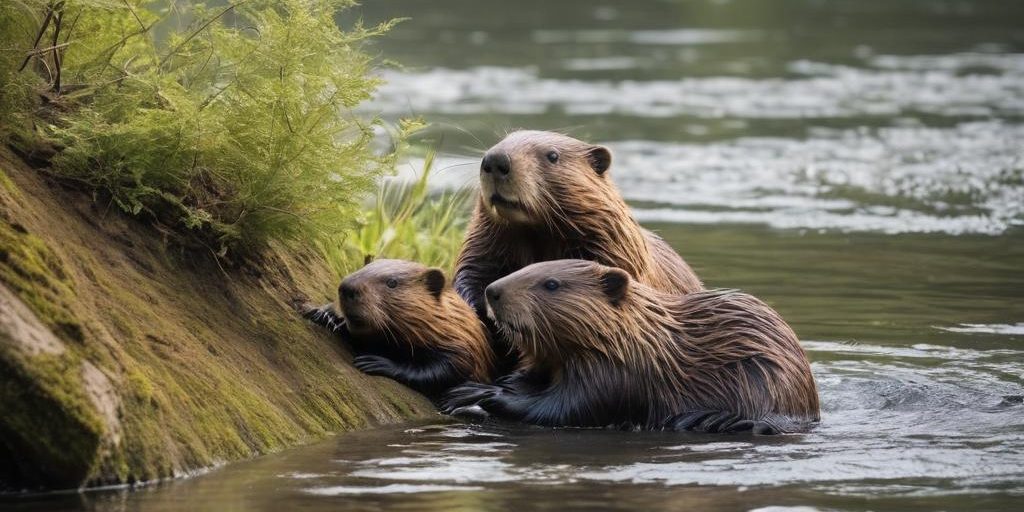
Beaver Boom: Why Official Recognition is a Watershed Moment for England and Wales’ Wildlife
In a landmark move, a coalition of wildlife charities in England and Wales are urging governments to officially recognize the recent surge in beaver sightings as a boon for the environment. The beavers, which have been present in the region for centuries but were hunted to extinction 400 years ago, have made a comeback in recent decades due to unlicensed releases and escapes.
The Wildlife Trusts, a network of wildlife charities, claim that scientific studies show beavers can improve water quality, alleviate flooding and drought, and boost habitats and other wildlife. According to the charity’s research, beavers are ecosystem engineers that play a vital role in shaping their surroundings. They build dams, which create wetlands and slow down floodwaters, allowing sediments to settle out of the water column. This process can lead to improved water quality, as pollutants are trapped behind the dam, and aquatic plants and animals thrive in the resulting ponds.
Moreover, beavers can also help mitigate the effects of climate change by creating habitats that are resilient to droughts and floods. The dams they build can store water during heavy rainfall events, releasing it slowly into the surrounding environment, thus alleviating the risk of flooding downstream. This process is crucial for maintaining healthy aquatic ecosystems, which support a vast array of plant and animal species.
However, despite these benefits being acknowledged as a native species in England last year, the government has been slow to act on plans to reintroduce them into the wild. The charities are calling for the governments in England and Wales to publish strategies for returning beavers to their natural habitats and allow “illegal” wild populations to stay. They argue that this would not only benefit nature but also provide economic benefits to communities through agri-environment schemes, which reward landowners who make space for beavers.
The beaver population has been growing rapidly, with kits (baby beavers) spotted swimming on rivers in Kent and birth rates increasing in fenced enclosures at nature reserves. In fact, this summer saw the first baby beavers born in urban London for over 400 years and the first beaver born in Northumberland for the same amount of time.
While some farmers and landowners oppose reintroductions due to concerns about crop damage and localized flooding, the Wildlife Trusts argue that successful reintroductions require a process to support communities to live alongside beavers. They propose rewarding landowners who make space for beavers through agri-environment schemes, which would not only help mitigate the risks associated with beaver activity but also provide economic benefits to those involved.
In Wales, beavers have not yet been recognized as a native species, meaning they are not formally protected. The charities are urging the Welsh government to follow England’s lead and officially recognize the beaver population. This move would not only bring significant environmental benefits but also help to mitigate the risks associated with unlicensed releases and escapes.
The call to action comes as experts say that beavers can bring huge benefits to nature, including improved water quality, alleviated flooding and drought, and boosted habitats and other wildlife. With the beaver population continuing to grow, it remains to be seen whether governments will take decisive action to officially recognize their presence in England and Wales.
In a statement, Dr. Emily Wilson, Conservation Manager at The Wildlife Trusts, said: “Beavers are one of the most charismatic animals in the UK, and they have a vital role to play in shaping our natural world. By officially recognizing beaver populations in England and Wales, we can work towards creating a future where these incredible creatures thrive alongside us.”
A New Era for Beaver Conservation
The Wildlife Trusts’ call to action marks a new era for beaver conservation in the UK. For centuries, beavers have been revered as “nature’s engineers,” playing a vital role in shaping their surroundings and creating habitats that support a vast array of plant and animal species.
In recent decades, however, human activities such as deforestation, hunting, and habitat destruction have driven beaver populations to the brink of extinction. The reintroduction of beavers into the wild has been met with mixed reactions, with some communities welcoming the return of these charismatic animals while others oppose their presence due to concerns about crop damage and localized flooding.
However, as the beaver population continues to grow, it is clear that they are having a profound impact on their surroundings. From improving water quality to alleviating flooding and drought, beavers are playing a vital role in shaping their environment and supporting a vast array of plant and animal species.
As we move forward into this new era for beaver conservation, it is essential that we recognize the benefits that these incredible creatures bring to our environment. By officially recognizing beaver populations in England and Wales, we can work towards creating a future where these amazing animals thrive alongside us.
What Does This Mean for the Future?
The recognition of beavers as a native species in England last year marks a significant shift in how we perceive these incredible creatures. However, there are still many challenges ahead, particularly when it comes to supporting communities who live alongside beaver populations.
One of the key concerns is that successful reintroductions require a process to support communities to live alongside beavers. This means providing education and resources to landowners and farmers, as well as implementing measures to mitigate the risks associated with beaver activity.
In Wales, beavers have not yet been recognized as a native species, meaning they are not formally protected. The charities are urging the Welsh government to follow England’s lead and officially recognize the beaver population. This move would not only bring significant environmental benefits but also help to mitigate the risks associated with unlicensed releases and escapes.
In the future, we can expect to see increased efforts to support communities who live alongside beaver populations. This may involve the implementation of agri-environment schemes, which reward landowners who make space for beavers. It may also involve providing education and resources to help mitigate the risks associated with beaver activity.
As we move forward into this new era for beaver conservation, it is essential that we recognize the benefits that these incredible creatures bring to our environment. By officially recognizing beaver populations in England and Wales, we can work towards creating a future where these amazing animals thrive alongside us.
Conclusion
In conclusion, the Wildlife Trusts’ call to action marks a new era for beaver conservation in the UK. For centuries, beavers have been revered as “nature’s engineers,” playing a vital role in shaping their surroundings and creating habitats that support a vast array of plant and animal species.
However, there are still many challenges ahead, particularly when it comes to supporting communities who live alongside beaver populations. By recognizing the benefits that these incredible creatures bring to our environment, we can work towards creating a future where they thrive alongside us.
The question remains: will governments take decisive action to officially recognize beaver populations in England and Wales? Only time will tell, but one thing is certain – beavers are playing a vital role in shaping their surroundings and supporting a vast array of plant and animal species.
Absurdly amazing! Meanwhile, Royal Mail can’t even deliver the mail on time, fined £10.5m for missing delivery targets (for the second year in a row, no less), but beavers are being hailed as ‘nature’s engineers’ and getting official recognition? I’m all for environmental conservation, but shouldn’t we prioritize fixing our own infrastructure before giving awards to semi-aquatic rodents? Or is this just another example of our government’s priorities being… well, let’s just say ‘drowned’ out by more pressing issues?
It seems the beavers have been busy engineering their return to England and Wales, but will they also engineer a new era of cooperation between humans and wildlife?
I completely agree with the author that officially recognizing beaver populations in England and Wales is a watershed moment for the region’s wildlife, and it’s about time we welcomed these furry engineers back with open arms. As someone who’s worked in environmental conservation, I’ve seen firsthand the incredible impact beavers can have on ecosystems, from improving water quality to alleviating flooding and drought. But what I’d love to know is, what’s the plan for supporting communities who may be affected by beaver reintroductions – will the governments provide adequate resources and education to help them coexist with these amazing creatures, or will it be a case of “beaver beware”?
Echoes and Lessons from Cold War Oceania. Miguel’s warnings about the potential displacement of native species and Easton’s calls for a holistic approach to ecosystem management both resonate deeply, but I have to ask: Miguel, don’t you think that Easton’s point about social media companies like Bluesky lacking transparency is equally applicable to the beaver conservation efforts, and shouldn’t we be cautious of false promises in both realms? And Easton, do you believe that the benefits of beavers as ecosystem engineers can be replicated in the digital world, where “dams” are built with code and data, and if so, what lessons can we learn from the beaver’s approach to shaping their environment?