
What works, what makes it worse, and when to stop and call a professional.
Last updated: 18 October 2026
Short answer: wear proper protection, use a fungicidal product rather than dry brushing, ventilate the room, and treat the moisture source. If the patch is bigger than about one square metre, keeps coming back, or sits on plasterboard or wallpaper, the landlord should arrange professional remediation.
Black mould is not just an aesthetic problem. Disturbing it incorrectly can send spores and irritants into the air, spread the contamination to other rooms, and make respiratory symptoms worse. The cleaning method matters as much as the product.
This guide covers safe removal for small patches caused by condensation, the mistakes that make things worse, and the point at which DIY cleaning stops being appropriate.
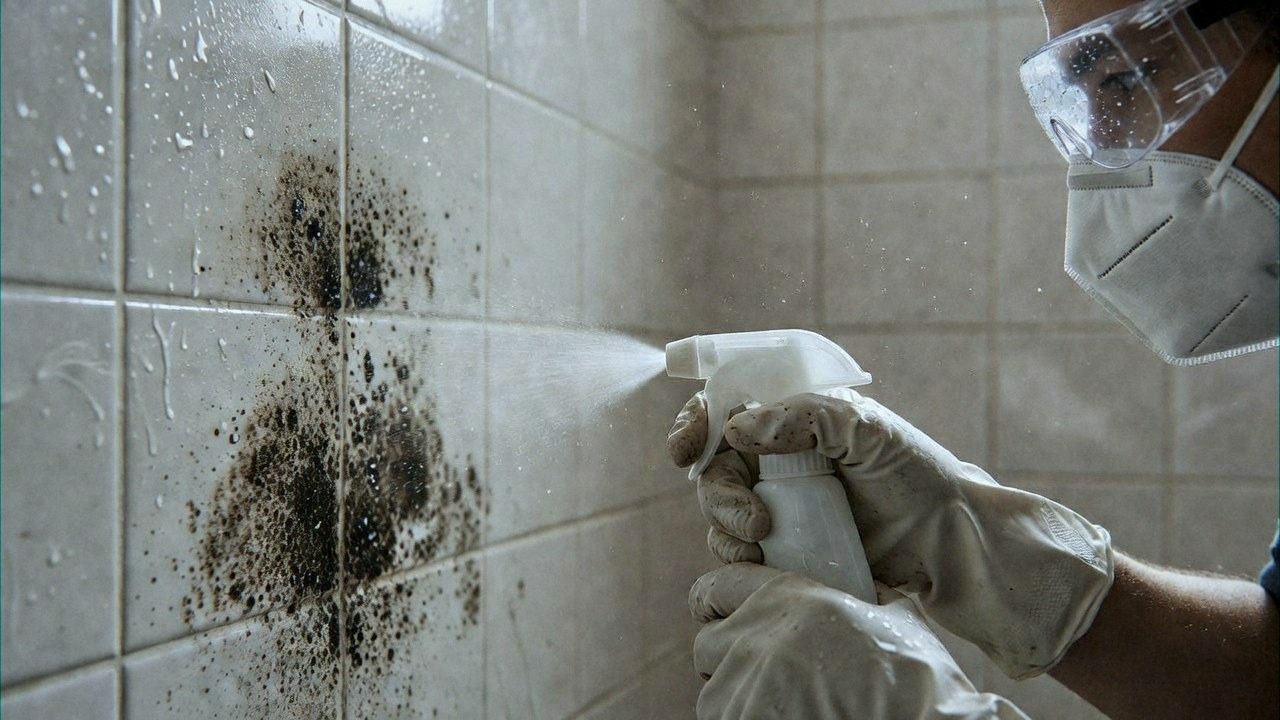
Safety first
Before you touch anything, protect yourself and the room.
- Gloves. Nitrile or rubber gloves, not thin food-preparation gloves.
- Eye protection. Goggles or wraparound safety glasses.
- Respiratory protection. A properly fitted FFP3 or N95 mask. A loose cloth or surgical mask does not seal and is not adequate for spores.
- Clothing. Old clothes you can wash at a high temperature, or disposable coveralls for larger jobs.
- Ventilation. Open a window and keep the room ventilated during and after cleaning.
- Isolation. Keep children, pets and anyone with respiratory conditions out of the room.
- Barrier. Close the door to the rest of the home and seal the gap under the door with a damp towel if you can.
If you have asthma, a lung condition, a weakened immune system or are pregnant, ask someone else to do the cleaning or get professional help.
What you need
- A fungicidal wash or a mould remover designed for the surface. Follow the label, including how long to leave it on.
- Disposable cloths or paper towels. Do not reuse a cloth that has been used on mould.
- A spray bottle if the product is not ready to use.
- A plastic bag for waste.
- A hygrometer if you want to check humidity afterwards.
Do not mix cleaning products. Mixing bleach with acidic or ammonia-based products can produce dangerous gases.
Step by step
1. Photograph the area first
Take a wide shot and a close-up, with something for scale. Note the date. If you rent, send the photos to your landlord before cleaning. You want evidence of the problem, not just a clean wall.
2. Clear the area
Move furniture, bedding, towels and toiletries away. If mould is on fabric, curtains or soft furnishings, treat them as contaminated and wash or replace them rather than brushing them in place.
3. Ventilate and protect
Open a window. Put on your gloves, eye protection and mask. If the mould is in a bathroom, turn on the extractor fan.
4. Apply the product
Spray or apply the fungicidal wash according to the instructions. Work from the outer edge of the patch inwards to avoid spreading spores. Do not scrub hard. Let the product do the work for the recommended contact time.
5. Wipe gently
Use a damp disposable cloth to wipe the surface. Do not dry brush. Do not use a vacuum cleaner unless it has a HEPA filter and is suitable for hazardous dust.
6. Check and repeat
If the staining remains after the first treatment, repeat once after the surface has dried. If it still returns within a few weeks, the moisture source has not been fixed.
7. Dispose of waste properly
Double bag used cloths, gloves and masks and put them in the general waste. Wash your hands and clothes afterwards. Clean the area around the patch, including skirting boards and window frames.
Bleach, vinegar and “mould paint”: what actually works
Bleach can lighten mould on hard, non-porous surfaces such as tiles, glass and sealed plastic. It does not reliably kill the roots inside porous materials, and it does not fix the moisture. On plaster, plasterboard, wallpaper and bare timber, bleach can make the surface look better while the problem continues underneath.
White vinegar is a mild acid that can help on some surfaces, but it is not a registered fungicide and is not a substitute for a proper mould remover on a persistent problem.
Bicarbonate of soda is useful as a gentle abrasive and odour absorber, but it does not kill mould roots.
Anti-mould paint is a coating, not a treatment. Painting over active mould traps it under a film and it often returns through the paint. If you use it, treat and dry the surface first, and fix the moisture source.
Fungicidal washes designed for mould remediation are the appropriate choice for affected walls and ceilings. Follow the instructions and use them with adequate ventilation.
Porous surfaces are different
Mould grows into materials, not just on them. On plaster, plasterboard, wallpaper, carpet, upholstery and bare timber, cleaning may only remove the surface growth. The material may need to be removed and replaced.
This is one reason why painting over mould rarely works. The substrate stays damp, the roots remain, and the mould pushes back through the coating.
If the affected area is porous and larger than a small patch, ask the landlord to arrange proper remediation. In a rental, this is a repair issue, not a cleaning issue.
When to stop and call a professional
Stop DIY cleaning and ask the landlord or a professional to take over if:
- The patch is larger than about one square metre.
- It keeps returning within weeks of cleaning.
- It is on plasterboard, wallpaper, carpet or inside a wall cavity.
- There is a smell of damp in a room with no visible mould.
- There has been a leak, flood or burst pipe.
- Anyone in the home has asthma, a lung condition or a weakened immune system.
- The mould is near a gas appliance, electrical fitting or ventilation system.
Professional remediation may involve containment, HEPA filtration, removal of contaminated materials and drying equipment. It is not the same as a cleaner wiping a wall.
Fixing the cause
Cleaning is only half the job. The other half is removing the moisture that feeds the mould.
- Repair leaks, blocked gutters and failed seals.
- Make sure extractor fans and trickle vents work.
- Dry laundry outdoors or in a vented dryer.
- Keep furniture away from cold external walls.
- Maintain a steady background temperature.
- Aim for 40% to 60% relative humidity.
- Deal with condensation on windows daily in cold weather.
If you rent and the cause is a building defect, report it in writing. The landlord is responsible for the structure, exterior and installations under section 11 of the Landlord and Tenant Act 1985, and the home must be fit for human habitation.
For the full tenant process, including how to report the problem and escalate it to the council, read our guide to black mould in rental homes. If you are not sure whether the cause is condensation or a building defect, start with black mould vs damp.
Frequently asked questions
Does bleach kill black mould?
It can lighten it on hard surfaces, but it does not reliably kill the roots in porous materials and does not fix the moisture. Use a fungicidal product and treat the cause.
Should I use a brush to scrub mould?
No. Dry brushing aerosolises spores and spreads them around the room. Use a damp disposable cloth and a fungicidal wash.
Can I paint over black mould?
Not while it is active. Painting traps the mould and it usually returns. Treat it, dry the surface, fix the moisture, then paint if needed.
How long does it take to get rid of black mould?
Small surface patches can be treated in an hour. Recurring or porous-surface mould can take professional remediation and drying, which may take days or weeks.
Is it safe to sleep in a room after cleaning mould?
Once the area is dry, ventilated and the product has been used as directed, usually yes. If you have respiratory symptoms or the mould keeps returning, get advice.
Can I clean mould in a rental myself?
You can clean small patches caused by condensation, but report it first and keep evidence. Structural or recurring mould is the landlord’s repair responsibility.
Sources and further reading
- Damp and mould: understanding and addressing the health risks, GOV.UK: https://www.gov.uk/government/publications/damp-and-mould-understanding-and-addressing-the-health-risks-for-rented-housing-providers
- Guide for tenants, Homes (Fitness for Human Habitation) Act 2018, GOV.UK: https://www.gov.uk/government/publications/homes-fitness-for-human-habitation-act-2018/guide-for-tenants-homes-fitness-for-human-habitation-act-2018
- WHO guidelines for indoor air quality: dampness and mould: https://www.who.int/publications/i/item/9789289041683
- NHS asthma advice: https://www.nhs.uk/conditions/asthma/
- Shelter England, repairs and fitness for habitation: https://england.shelter.org.uk/housing_advice/repairs
This article is general information, not legal or medical advice.