
They often appear together, but they are not the same problem. Here is how to tell them apart and why it matters for fixing your home.
Last updated: 18 October 2026
Short answer: damp is moisture trapped in the fabric of the building. Black mould is a fungus growing because of that moisture. Treating the mould without fixing the damp is a temporary clean. The damp will bring it back.
If you rent a flat or house in the UK, you have probably seen both words used interchangeably. Landlords say “damp”, tenants say “mould”, and the internet offers a hundred conflicting fixes. The distinction matters because the cause, the cure and the person responsible can be different.
This guide explains the three main types of damp, how to recognise each one, and what black mould looks like when it is growing on top of them. It is written for tenants in England, though the physical signs are the same everywhere.
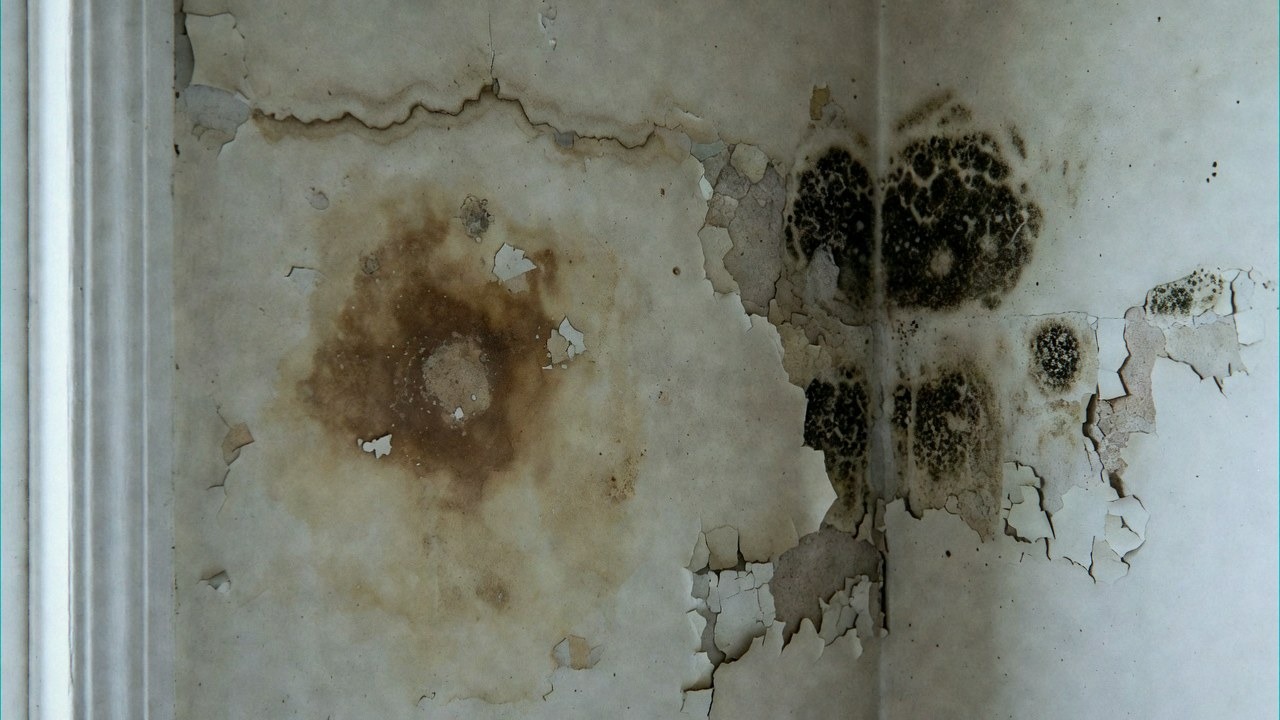
What damp actually means
Damp is excess moisture in a building material: plaster, brick, timber, insulation or concrete. It can come from outside, from the ground, from a plumbing leak, or from the air inside the home.
When a material stays wet for long enough, three things happen. Paint and wallpaper start to fail. The material loses insulation value and becomes colder. And mould spores, which are present in every home, find the conditions they need to grow.
Damp is the cause. Mould is the symptom. This is why cleaning mould without finding the moisture source is a losing battle.
The three main types of damp
Condensation damp
This is the most common type in UK homes, especially flats and older houses with poor ventilation.
Warm air can hold more water vapour than cold air. When warm, moist air meets a cold surface, the vapour turns back into liquid water. That surface is usually a window, an external wall, a ceiling corner, a bathroom tile or a mirror.
Typical signs:
- Water droplets or mist on windows in the morning.
- Black spots in corners, on window frames, behind curtains and on external walls.
- A musty smell that gets stronger when the room has been closed.
- Mould that returns within weeks of cleaning.
- No tide marks and no obvious leak.
Condensation is worst in winter, in bathrooms and kitchens, in rooms where laundry is dried indoors, and wherever furniture is pushed tight against a cold wall.
Penetrating damp
This comes from water getting into the building from outside. Common causes are a missing roof tile, cracked render, a failed window seal, blocked gutters, a leaking pipe inside the wall, or defective flashing around a chimney.
Typical signs:
- A damp patch that grows after rain.
- A tide mark or brown ring around the edge of the patch.
- Blistering or bubbling paint.
- Damp concentrated on one wall, often high up or around a window.
- Mould that appears in a localised area rather than across the whole room.
Penetrating damp is a repair issue. Cleaning and ventilation will not solve it while water is still getting in.
Rising damp
Rising damp comes up from the ground through the wall. It is less common than people think, and it is often misdiagnosed.
Typical signs:
- Damp in the bottom metre of a ground-floor wall.
- A white, salty deposit on the plaster, sometimes called efflorescence.
- Damaged skirting boards or crumbling plaster near the floor.
- A musty smell at low level.
- The problem persists in summer as well as winter.
Genuine rising damp usually means a failed or missing damp-proof course. Landlords sometimes try to treat it with injected chemicals when the real problem is a leak or condensation, so a proper survey matters.
Black mould vs damp: the practical differences
| Question | Condensation damp | Penetrating damp | Rising damp |
|---|---|---|---|
| Where is it? | Windows, corners, cold walls, bathrooms | One wall or patch, often after rain | Bottom of ground-floor walls |
| When is it worse? | Cold weather, mornings, after cooking or showering | After rain | All year, often worse in winter |
| What does it look like? | Droplets, black spots, no tide marks | Damp patch with a ring or tide mark | Dark lower wall, white salt deposits |
| Does it smell? | Musty, stronger in closed rooms | Damp and earthy | Damp, often at floor level |
| Who fixes it? | Usually ventilation and heating, sometimes the landlord | Landlord, as a repair | Landlord, as a structural repair |
Black mould can grow on all three. It is most associated with condensation because condensation is the most widespread, not because it is the only cause.
How to tell whether it is mould or just dirt
Mould usually appears as small black or dark green spots in clusters. It can look fuzzy or powdery. When you wipe it with a damp cloth, it tends to smear rather than come away cleanly. It often has a musty smell.
Dirt and soot are usually more uniform, wipe away without smearing, and do not have that earthy smell. Condensation stains can look like dark patches but are usually flat and dry to the touch once the surface warms up.
If you are unsure, take a dated photo and send it to your landlord. Do not scrape or dry brush the area, because that spreads spores.
Why the difference matters for tenants
If the problem is condensation, the fix is usually a combination of ventilation, heating and drying habits, plus making sure extractor fans and trickle vents actually work. Landlords still have a role: a home with no working ventilation, failed double glazing or blocked vents is not a tenant problem.
If the problem is penetrating or rising damp, it is a repair. The landlord is responsible for the structure and exterior under section 11 of the Landlord and Tenant Act 1985. Cleaning the mould and painting over it does not discharge that duty.
In both cases, the home must be fit for human habitation. Under the Homes (Fitness for Human Habitation) Act 2018, a serious damp or mould hazard can make a home legally unfit. Tenants can take a landlord to the county court without waiting for the council.
What to do next
- Photograph everything. Take wide shots and close-ups, with dates. Note whether the patch changes after rain.
- Check the simple causes. Is the extractor fan working? Are the trickle vents open? Is furniture blocking airflow? Is laundry being dried indoors?
- Report it in writing. Describe the location, size and any pattern. Ask the landlord to find and fix the cause, not just clean the surface.
- Escalate if nothing happens. Ask the council’s environmental health team to inspect under the Housing Health and Safety Rating System.
- Use the right treatment. A fungicidal wash for small patches, professional remediation for large areas or porous materials.
For the full tenant process, including a template email and the current legal position, read our guide to black mould in rental homes.
Frequently asked questions
Is damp always caused by mould?
No. Damp is moisture. Mould is a fungus that grows when moisture persists. You can have damp without visible mould, and mould without an obvious damp patch.
Can black mould appear without damp?
It needs moisture, but the moisture may be temporary condensation rather than a structural leak. High humidity alone can be enough.
Does ventilation fix damp?
It fixes condensation damp in many cases, but not penetrating or rising damp. Those are building repairs.
Is rising damp common in flats?
Less common than condensation. Ground-floor flats are more likely to have it. Upper floors cannot have classic rising damp.
Should I clean mould before the landlord inspects?
Clean a small area if it is a health risk, but photograph it first and keep the evidence. Do not repaint or cover it before an inspection.
Sources and further reading
- English Housing Survey 2024-25, GOV.UK: https://www.gov.uk/government/statistics/chapters-for-english-housing-survey-2024-to-2025-headline-findings-on-housing-quality-and-energy-efficiency/introduction-and-key-findings
- Guide for tenants, Homes (Fitness for Human Habitation) Act 2018, GOV.UK: https://www.gov.uk/government/publications/homes-fitness-for-human-habitation-act-2018/guide-for-tenants-homes-fitness-for-human-habitation-act-2018
- Damp and mould: understanding and addressing the health risks, GOV.UK: https://www.gov.uk/government/publications/damp-and-mould-understanding-and-addressing-the-health-risks-for-rented-housing-providers
- Shelter England, repairs and fitness for habitation: https://england.shelter.org.uk/housing_advice/repairs
- WHO guidelines for indoor air quality: dampness and mould: https://www.who.int/publications/i/item/9789289041683
This article is general information, not legal advice.