
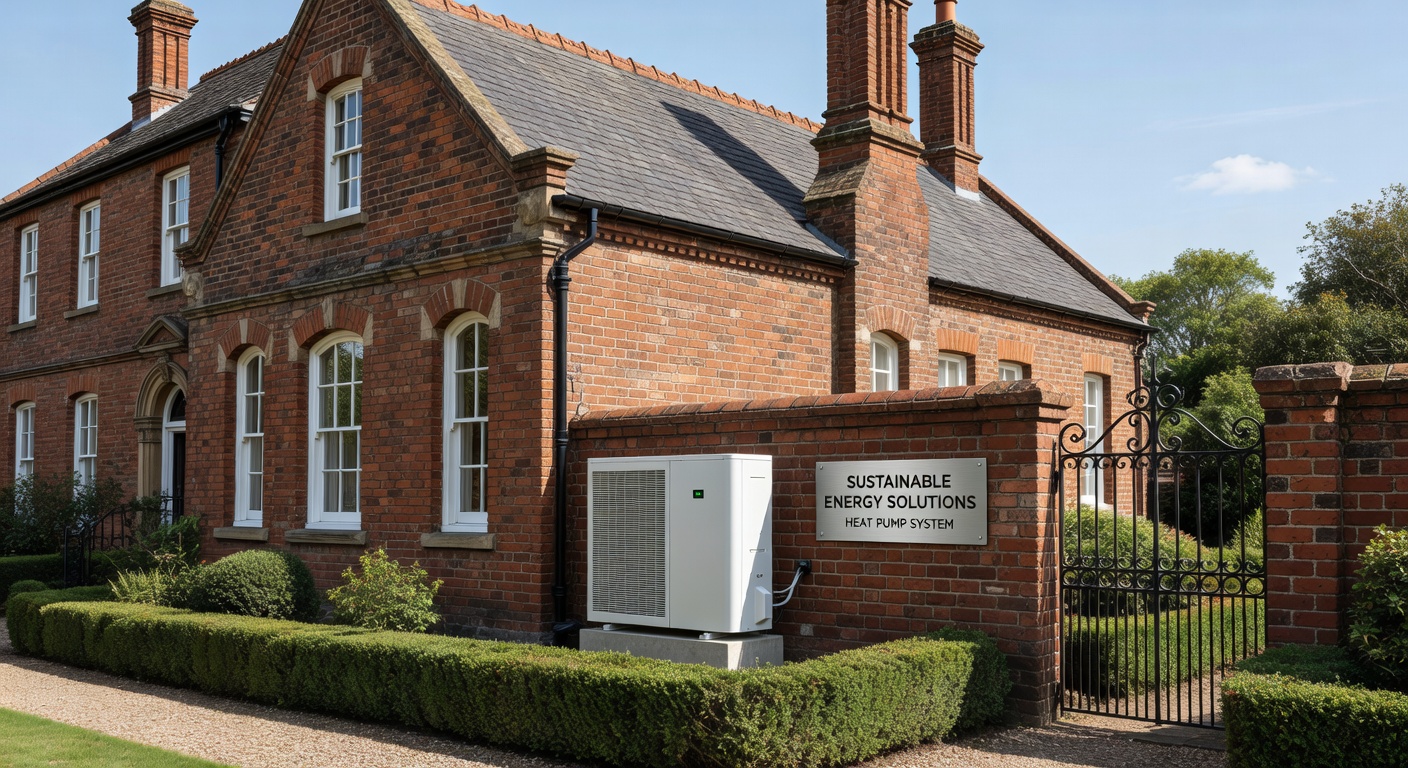
The £7,500 Heat Pump Revolution: A Returnee’s Guide to British Homes Going Green
| By Marcin Konarski | Home Ideas | February 2025 |
|---|
A Homecoming After Six Years
When I boarded that flight to California in 2019, leaving behind my software engineering career at Google and Samsung, I thought I knew everything about the British property market. I was wrong.
Six years in Silicon Valley changes your perspective. Out there, smart homes aren't futuristic concepts—they're Tuesday afternoon IKEA trips. Solar panels are as common as rain in Manchester. And heat pumps? They've been standard in new California builds since before Brexit was even a word.
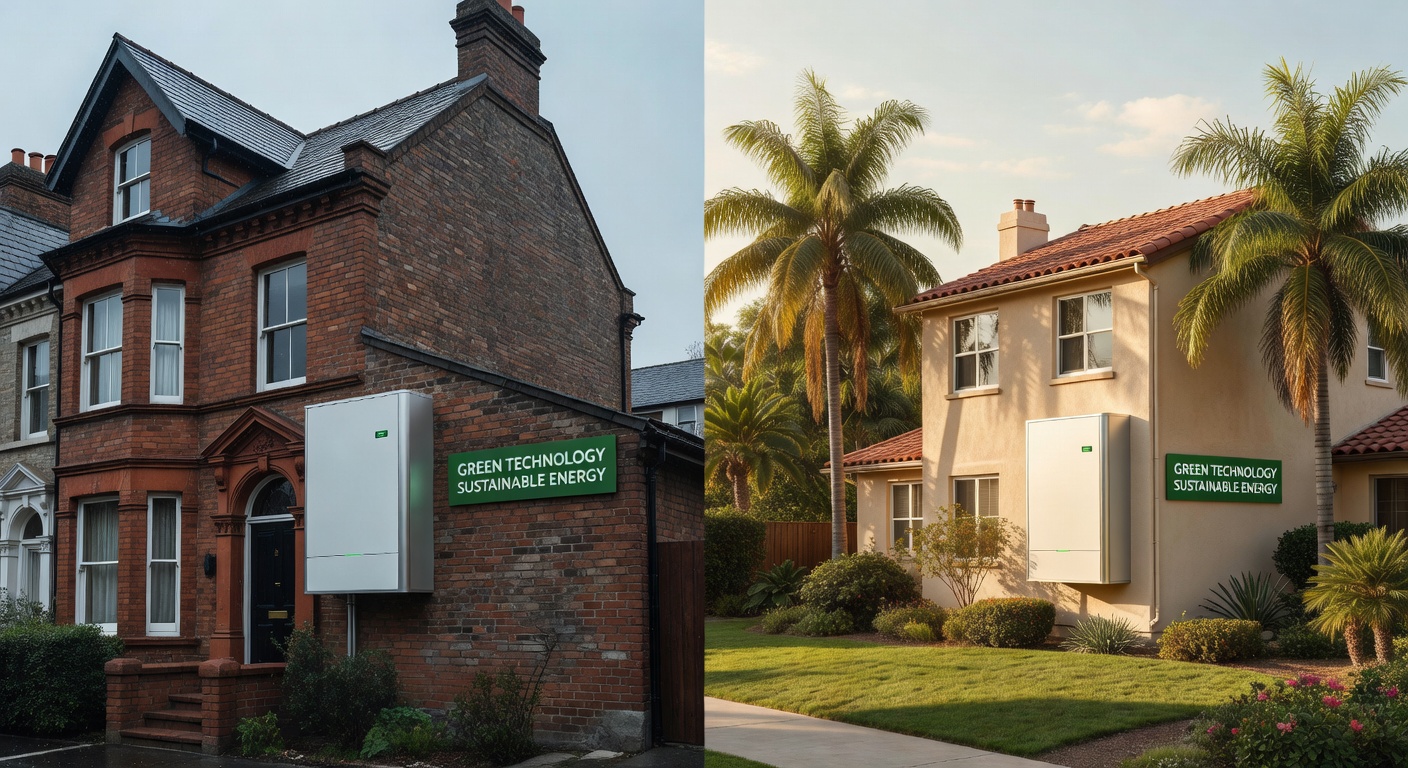
But now I'm back. And as I walk through the streets of my old London neighbourhood, past the Victorian terraces and 1930s semis that define British housing, I'm struck by something unexpected: the UK is finally catching up.
The catalyst? A government grant that might just be the most significant home improvement incentive since Help to Buy. Let me explain why £7,500 is changing everything—and why, after a decade in tech, I'm genuinely excited about boilers.
The Grant That Broke the Internet (Well, British Gas’s Website)
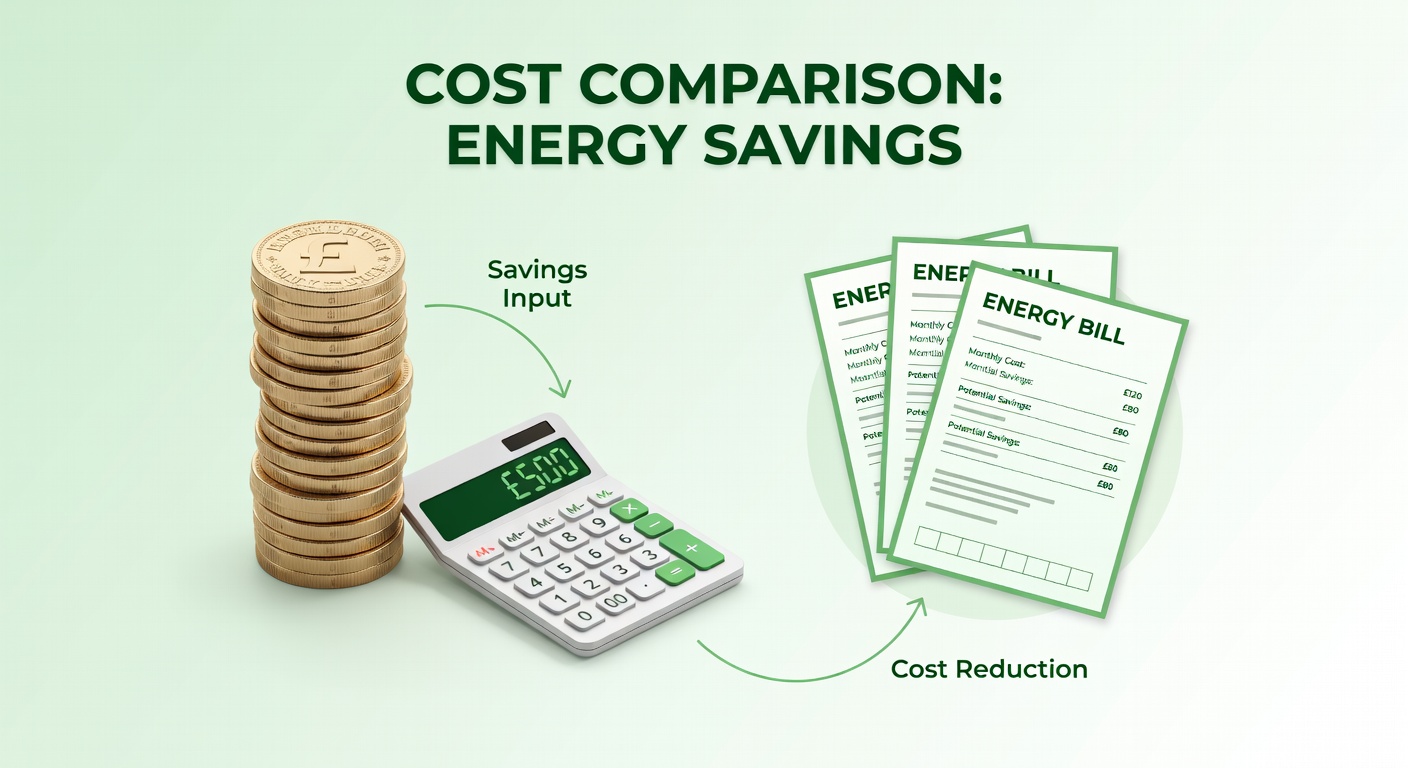
In April 2022, the UK government launched the Boiler Upgrade Scheme. Initially offering £5,000 for air source heat pumps and £6,000 for ground source, it was… fine. Uptake was sluggish. Most homeowners looked at the £10,000-£15,000 installation cost, subtracted the grant, and still saw a bill larger than a decent used car.
Then came October 2023. The grant increased to £7,500 for both types. Suddenly, the maths changed.
Let me break this down from someone who's done the calculations in both dollars and pounds:
Before the increase:
- Average air source heat pump: £12,000
- Less grant: £5,000
- Your cost: £7,000
After the increase:
- Average air source heat pump: £12,000 (prices have actually dropped slightly due to competition)
- Less grant: £7,500
- Your cost: £4,500
That's cheaper than a mid-range boiler replacement. And here's where it gets interesting from a tech perspective.
Why Heat Pumps Are Actually Brilliant Technology
During my time at Google, I worked on energy efficiency algorithms for data centres. The principles are identical: move heat rather than generate it. It's thermodynamics 101, but applied at domestic scale.
A heat pump works like a refrigerator in reverse. Instead of pumping heat out of your fridge to keep food cold, it extracts heat from the outside air (even in winter) and pumps it into your home. For every 1 kWh of electricity used, you get 3-4 kWh of heat. Compare that to a gas boiler's 0.9 efficiency rating.
In California, this was old news. The mild climate made heat pumps a no-brainer. But I was sceptical about the UK. Our winters are harsher. Our homes are older. Our insulation is… let's be charitable and call it "characterful."
So I spent the past three months researching. I visited installers in Manchester. I spoke with early adopters in Bristol. I analysed SCOP (Seasonal Coefficient of Performance) ratings until my spreadsheets begged for mercy.
My conclusion? Modern heat pumps work in British winters. Full stop.
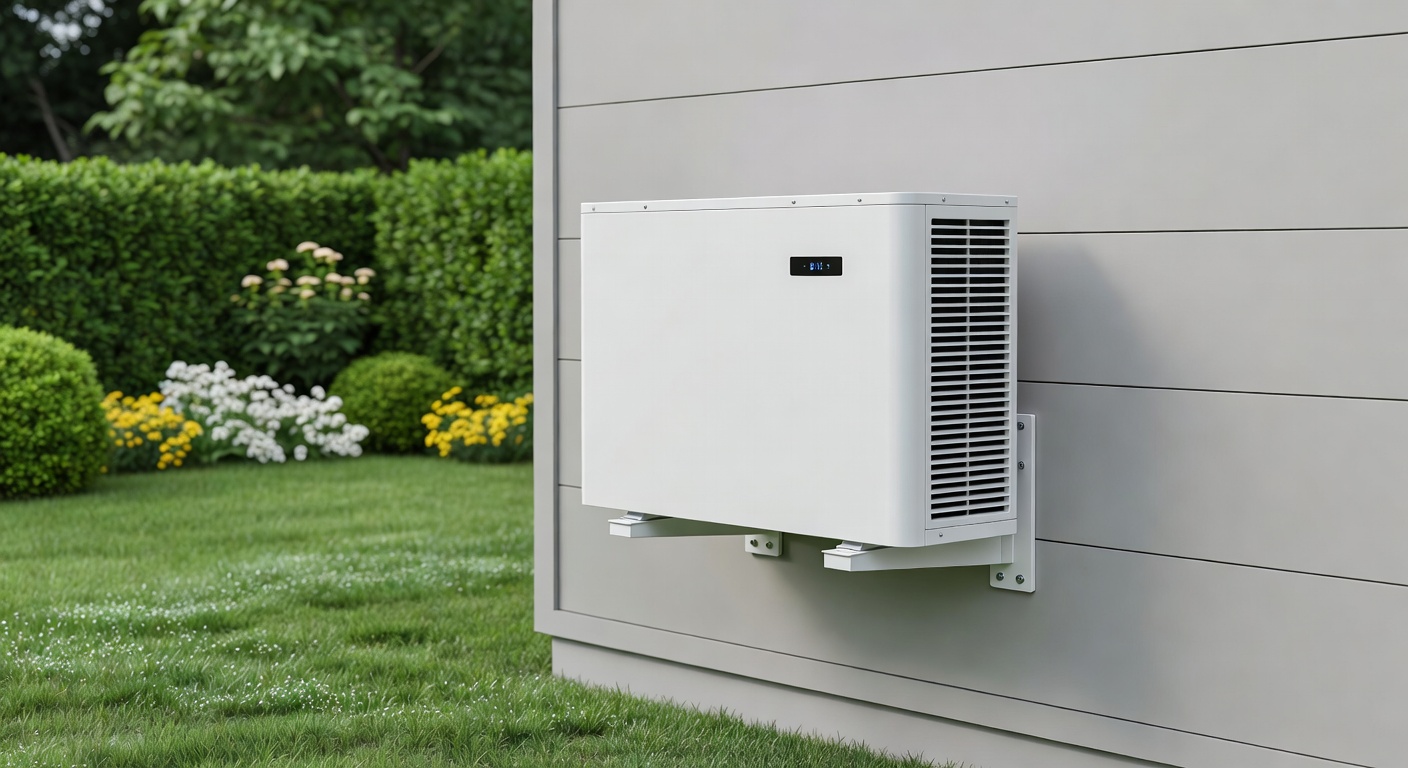
The latest models operate efficiently at -15°C. Yes, you'll use more electricity on the coldest days of January. But over a heating season, even in Scotland, you're looking at significant savings compared to gas—especially with current energy prices.
The California Comparison: What I Learned
Living in San Diego gave me a front-row seat to America's energy transition. Here's what surprised me when I returned to the UK:
1. The Technology Gap Has Closed
In 2019, British heat pumps were clunky, noisy, and poorly supported. Now? The same manufacturers supplying California—Daikin, Mitsubishi, Samsung—are installing identical units in Coventry and Cardiff. The hardware is identical. The difference is installation expertise, which has improved dramatically.
2. British Homes Are Actually Better Suited Than I Expected
Victorian terraces with solid walls were my biggest concern. But the data tells a different story. Properly sized heat pumps, combined with basic draught-proofing and loft insulation (which most UK homes already have), perform admirably. The key is accurate heat loss calculations—something British installers have gotten much better at.
3. The Financial Case Is Stronger Here
This shocked me. Despite California's sunshine and higher energy costs, the UK's combination of the £7,500 grant, the gas boiler ban in new builds from 2025, and the 2035 target for all homes to have low-carbon heating creates a clearer investment case. In California, heat pumps made environmental sense. In the UK, they make financial sense too.
The Reality Check: What Nobody Tells You
Look, I'm a tech optimist by trade. But I'm also an engineer. Let me give you the unvarnished truth about heat pumps in 2025.
Your radiators might need upgrading. Heat pumps work best with underfloor heating or oversized radiators running at lower temperatures. If you've got standard single-panel rads from the 1980s, factor in £2,000-£4,000 for replacements.
Your electricity supply might need work. Older homes with 60-amp main fuses may need upgrades. Budget £500-£1,000.
Installation quality varies massively. This isn't a combi boiler swap. Proper heat pump installation requires heat loss calculations, system design, and commissioning. Get three quotes. Check MCS certification. Read reviews. The hardware is proven; the installation is where things go wrong.
Running costs depend on your electricity tariff. At 30p/kWh, heat pumps save money versus gas. At 40p/kWh, it's marginal. Consider time-of-use tariffs or solar panels to maximise savings.
The 2028 Deadline Nobody’s Talking About
Here's something I discovered in my research that isn't getting enough attention: Energy Performance Certificate (EPC) regulations.
By 2028, all rented properties in England and Wales must achieve at least EPC band C. Currently, about 60% of rental stock is below this standard. Landlords are panicking—and heat pumps are a fast track to compliance.
An EPC calculation heavily weights heating systems. Switching from a G-rated gas boiler to an efficient heat pump can improve your rating by 5-10 points. For landlords staring at £30,000 fines for non-compliance, the £7,500 grant makes heat pumps a no-brainer.
If you're a tenant, expect your landlord to make changes soon. If you're a landlord, act now while the grant is available and installation slots are bookable.
My Predictions: A Silicon Valley Perspective
After twelve years in tech, I've learned to spot inflection points. The UK heat pump market is at one right now. Here's what I expect over the next five years:
2025-2026: Grant uptake accelerates. Installation backlogs grow. Prices stabilise as competition increases.
2027: Major boiler manufacturers (Worcester Bosch, Vaillant) pivot heavily to heat pumps. Gas boiler R&D funding drops.
2028: EPC deadline creates a landlord rush. Installation capacity becomes the bottleneck, not demand.
2029-2030: Heat pump prices drop below £8,000 retail. The grant becomes less necessary and may be reduced. Early adopters (that's you, if you act now) look very smart.
Beyond 2030: Gas boilers become the vinyl records of heating—technically available, but increasingly niche and expensive to maintain.
Should You Get One? My Honest Assessment
If you're replacing a boiler anyway: Absolutely. With the £7,500 grant, the maths work.
If your boiler has 5+ years left: Maybe. Consider your energy prices, insulation quality, and environmental priorities. The grant won't last forever, but neither will your boiler.
If you live in a listed building or conservation area: Check first. Planning permission may be required for external units.
If you're renting: Push your landlord. The 2028 deadline gives you leverage. Heat pumps improve your EPC and reduce void periods.
Final Thoughts: Why This Matters
When I left for California in 2019, I was frustrated with the UK's slow pace of change. I watched American homes get smarter, greener, more efficient while British housing stock seemed stuck in the 20th century.
Returning in 2025, I see a different picture. The £7,500 heat pump grant isn't just a subsidy—it's a statement of intent. The government is serious about decarbonisation. The industry has responded with better technology and training. And homeowners, faced with rising energy bills and climate anxiety, are finally ready to change.
Is the transition perfect? No. There are installation quality issues, supply chain challenges, and information gaps. But as someone who's seen this play out in California, I can tell you: the UK is moving in the right direction, faster than I expected.
Six years ago, I left to find the future. Turns out, it was here all along—just taking a bit longer to arrive.
Resources
Find MCS-Certified Installers:
Energy Saving Trust Calculator:
Marcin Konarski is a technology consultant and former software engineer at Google and Samsung. After six years in California, he now writes about the intersection of technology, property, and sustainable living. He lives in London with his wife and an unhealthy obsession with home automation.
Article originally prepared for Home Ideas. Research current as of February 2025. Grant amounts and regulations subject to government changes.